
What Does a Farm Need for Restroom Access?
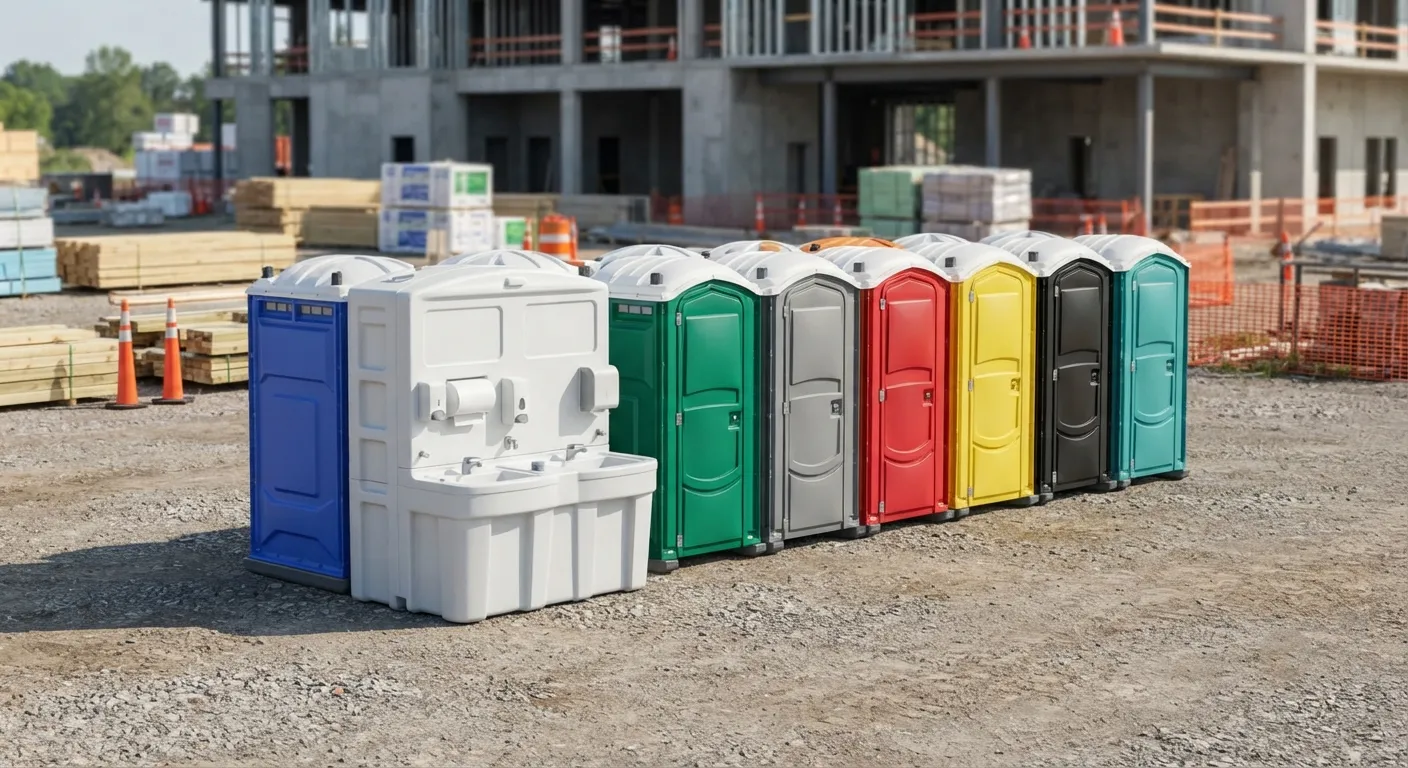
OSHA 1928.110 covers hand-labor farm operations directly: potable water, toilets, and a handwashing setup, all within a quarter mile of where people are working. That's a tighter standard than a lot of growers expect, and it means one unit way out by the barn doesn't cut it if your crew is working a back forty. A standard porta potty rental holds 60 to 70 gallons and stands about 92 inches tall, small enough to move between fields as the work shifts. Most Amherst farms run a few units on rotation rather than one fixed spot, especially during row crop harvest when labor spreads out fast, and growers weighing a deluxe flushable porta potty against a basic model should check the porta potty rental cost breakdown first.
Potable water matters too. OSHA 1926.51(a)(1) requires an adequate supply wherever people work, and on a farm that usually means a water cooler or jug station next to the toilet, not a separate stop. Pair that with a handwashing station rental or a portable sink rental so crews wash before breaks and meals. Soap and towels are required under 29 CFR 1910.141(d)(2); hand sanitizer alone does not satisfy that rule, so skip the temptation to just clip a bottle to the fence post. If you're not sure how many stations your operation needs, the handwashing station requirements page breaks down placement by crew size, and if a worker needs accessible facilities, our ADA accessible porta potty page covers what a compliant unit needs.
How Many Units Does a Farm Crew Need?
Run one unit per 20 workers as your baseline, per OSHA 1928.110, then add capacity if your crew spreads across multiple fields more than a quarter mile apart. A 15-person weeding crew and a 15-person harvest crew working opposite ends of the same Amherst property need two separate setups, not one. Our how many porta potties do I need guide walks through the math for split crews and seasonal peaks, and the broader OSHA portable toilet requirements page covers ratios beyond the farm-specific rule.
Rural properties around Amherst also mean longer driveways and softer ground, so we plan delivery routes ahead of time. Growers near Tonawanda, about 9.0 miles west, and Wheatfield, 10.8 miles northwest, often ask about access for the service truck before a first delivery, and that's the right question to ask. If your lane is gravel or narrow, tell us up front, since it affects the same clearance planning we use for a roll-off dumpster rental delivery on tighter properties. For roadside or right of way placement, check with the Town of Amherst before setting anything near a public road; that's not something we can confirm for you, and it varies by parcel.
Pricing on a standard unit runs by the week or month depending on how long your season runs:
| duration | typical price |
|---|---|
| day | $150 |
| week | $200 |
| month | $200 |
Weekend rentals for a short event or a single harvest weekend run higher than a weekday rate, so ask about that when you call, and compare it against our porta potty rental per day figures if your need is shorter than a full week. For longer seasonal placements, our monthly porta potty rental page has more detail on how billing works across a full growing season.
Do Farm Restrooms Need Regular Servicing?
Yes, and the standard service interval matters more on a farm than almost anywhere else, because dust, heat, and heavy use during harvest all speed up how fast a tank fills. ANSI/PSAI Z4.3 sets a baseline of one service visit per week for up to 10 users over a 40 hour week, and a crew working long harvest days can hit that baseline fast. We adjust the pump-out schedule once we know your crew size and hours, not the other way around, much like we schedule a septic pumping service visit around a household's actual usage rather than a fixed calendar date. Check how often are porta potties cleaned for more on what a normal service visit includes.
Farms near Grand Island, about 12.9 miles west of Amherst, and North Tonawanda, 9.3 miles northwest, sometimes run seasonal labor housing on site too, which changes the sanitation math since people are there around the clock, not just during work hours. If that's your setup, look at a holding tank rental or talk to us about a restroom trailer rental instead of standard units, since trailers handle continuous use better than a single-stall unit. For orchard or vineyard operations, our farm and agricultural restrooms setup can pair with a portable restroom rental for buyers and visitors during pick-your-own season, since a farm stand crowd has different needs than a labor crew, and a temporary fence rental can help keep visitor parking separate from working fields.
How far in advance should I book for harvest season?
Book two to three weeks ahead if you can, since harvest is our busiest stretch and routes fill up fast. Amherst growers who wait until the week of picking sometimes get placed on a shorter list of available dates. Earlier is always better for multi-week placements.
Can I move units between fields during the season?
Yes, standard units are built to be relocated, and we can schedule a mid-season move if your crew shifts to a different section of the property. Just give us a few days notice so we can route the truck, the same lead time we ask for when repositioning a storage container rental between job sites. There may be an additional delivery charge depending on distance.
What happens in bad weather or mud season?
Wet ground can delay delivery or servicing if the truck can't safely reach the unit. We'll work with you on placement, often moving units closer to a gravel lane or hard surface, and our porta potty placement guide covers the same ground stability questions we use for farm sites. Check our porta potty in winter guide for cold-weather specifics too.
Do I need a separate handwashing station if I already have a toilet?
Yes. OSHA 1928.110 treats toilets and handwashing as separate requirements, and soap and towels are required under 29 CFR 1910.141(d)(2). A combined unit or a nearby handwashing station rental satisfies both without extra trips for your crew.
Can seasonal workers living on site use the same units as day laborers?
They can, but volume adds up fast with round-the-clock use. We'll usually recommend a holding tank rental or extra units once we know how many people are on site overnight versus just during work hours.
Next step
Get a delivery date
Tell us the address, the dates and the headcount. We size the order and confirm the route.